

I had the very good fortune to be able to tag along with IDNR burn crews as they performed a 1500 acre woodland prescribed burn. While I did not visit during the prep phase of the burn, I was there for the pre burn briefing, and for the first fire on the ground. It is safe to say that I was in awe of the whole experience. I told one guy that it was kind of a bucket list experience, only until that day, I had no idea it was on my list.
After the briefing, I got paired up with a young man who was manning an atv with a spray tank on back. His job was to make sure there were no spot fires or slop over fires. One of the first things I discovered about the people that are involved in this land management tool, is that they are dedicated to the process, and they are very good at what they do.
Watching the burn boss lay down the first fire was an event in and of itself. All the burn parameters came together, and when he put fire on the ground, you knew it was go time.
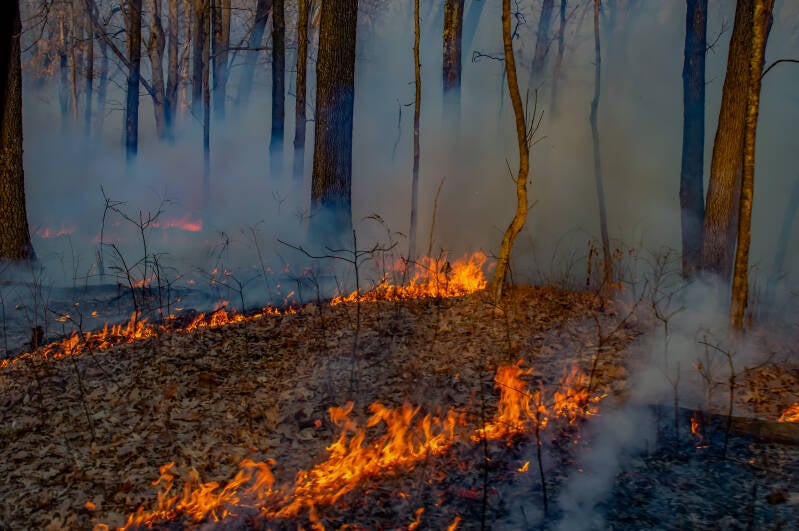
I discovered that this woodland fire was not going to be a wild, large roaring fire that you see so often in images from the wildfires that we see in the news way too often. There was good fire, moving thru the under story of the woodland, and the litter (dead leaves and branches) were consumed, leaving a nice black carpet in the woods. It was actually beautiful. It had a clean look, no more leaf litter, no more small dead branches laying around. Clean and new is the description that I would give the area.
Talking with the young man I was paired with, within about a week from the burn, wildlife will start to return. Turkeys foraging for acorns and other food items will be back, and it will be so much easier for them to find the food they are looking for. It seems that the wildlife loves it when there is a burn. Life becomes a little easier. Isn't that what we all strive for?
As I mentioned, I was paired with a gentleman whose sole job was to make sure there were no fires that escaped the burn area, and if there was, appropriate action was applied. We found one spot fire, and before you knew it, a small little fire outside of the burn area was dealt with in a quick and efficient manner, problem solved.
I was told by a couple of crew members that they would be there till the wee hours of the morning, making sure that there were no embers burning anywhere in the burn area. Fallen logs, standing dead trees always offer an opportunity for reigniting. As a professional crew would do, they did their job, and when the job was declared finished, it was in fact, a completed burn, no unwanted situations, a burn that did it's job and a tired crew ready for some rest.
I can not say enough about each and every one of the burn crew members that performed this burn. They were the most professional, dedicated and determined crew that I have ever had the pleasure of associating with. I also found that many of these guys also answer the call when asked to assist with wildfires in other area's.
One thing that really stood out to me at Siloam Springs was how much smoother everything ran because the burn plan wasn’t just written — it was lived. Before anyone struck a match, we circled up and walked through every part of that plan. You could feel the shift in the crew as the briefing went on. People weren’t just listening; they were locking in. Everyone knew the weather window we were working in, the fuel conditions, the ignition pattern, the holding strategy, and where they needed to be when things started moving.
That kind of clarity changes the whole tone of a burn. If fire escaped the burn area, the crew knew exactly how to assess the situation, and they knew how to react.
A good burn plan answers the questions long before the fire does:
-
What are we trying to accomplish today
-
What conditions make this burn safe and effective
-
How many people do we need, and where do they need to be
-
What are the go/no‑go triggers
-
What’s the plan if something shifts or escapes
It’s not the full checklist — far from it — but these pieces are the backbone. At Siloam Springs, it was obvious how much confidence comes from having those answers in your pocket.
A successful burn isn’t just about lighting fire. It’s about having a plan, following the plan, and having a backup plan for when the fire decides to write its own script. Conditions change. Wind shifts. Fire finds a pocket of fuel you didn’t expect. But when the crew already knows what to do, the response is calm, quick, and controlled.
I am still new to the whole prescribed burn thing. When I see people who are so dedicated, and believe so deeply in this process, it is hard not to become excited about using prescribed burn for land management purposes. It is why I jumped on this bandwagon. I want to manage our families farm using prescribed burn. I want to see the transformation, I want to make our ground have an impact on habitat, on our lives. Having an experience like this one has motivated me to become as educated and experienced as I can be, so that I can help our property, so I can help our members reach their land management goals.
Add comment
Comments